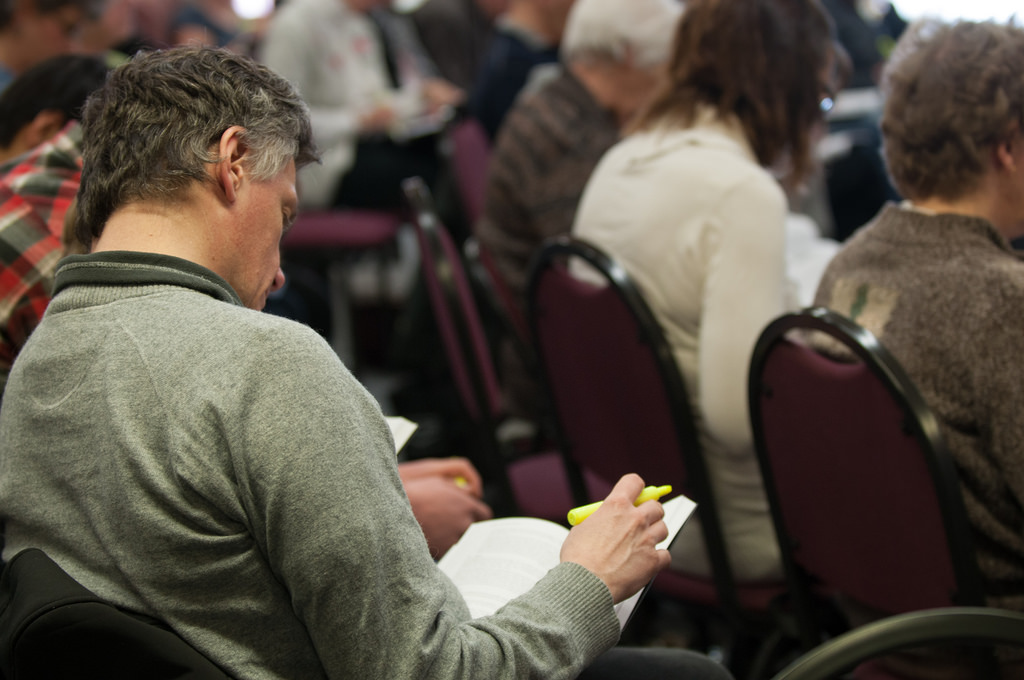
After attending a TERM Seminar, Jacob* was eager to try leading a course just as he had been shown. He booked a room at his church and publicized that a course was about to start. He told a church leader he would be going through the book The Stranger on the Road to Emmaus. The church leader quipped, “You’ll be doing well if you get three! The study is a bit long and Friday night is not a good night.” Undaunted, Jacob trusted the Lord to bring people. He is now mid-way through the course and he sent us an update:
Category: The Stranger on the Road to Emmaus
Question Time with Oaks Christian School No.1: Spiritual Warfare
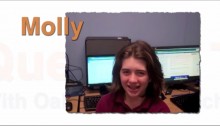
The eighth grade class from Oaks Christian School did a Bible study using The Stranger on the Road to Emmaus VideoBook. When they had finished, the students had a number of questions for the author. Rather than just sending their questions over email, the class made a video!
We’re pleased to have John Cross reply, also by video. Over the next few weeks, we will post the series of video questions along with John’s replies.
The first Q&A video features a question about spiritual warfare. We were charmed by Molly, who asked if John had encountered any spiritual attacks while he was filming the Stranger VideoBook. Though he didn’t experience any overt spiritual attacks, John pointed out that the Bible tells us we are waging spiritual battle daily. Each day, we have to make choices in life and the Bible says we can either make wise choices or foolish ones.
The choices we make are part of the daily spiritual battle we each fight. In the video, while near Nablus (biblical Shechem), John points to two large visual aids that God used to teach this truth. There in the background are Mt Gerizim and Mt Ebal, the mountains of blessing and cursing (see Deut 11:26-32). They are God’s reminders that in our daily spiritual battle, wise choices lead to blessings while foolish choices bring curses on our lives.
Watch Molly and John Cross below:
See more Question Time videos with The Oaks Christian School:
- J’Leigh asks about John Cross’s favourite location in Israel
- Richard asks about the use of visual aids
- Manon asks John what the funniest moment was when filming The Stranger VideoBook
- Ben asks about the second most important point of the video series
- Emily asks which is John’s favourite verse
- Cameron asks which is John’s favourite book of the Bible
We would like to express our thanks to The Oaks Christian School, the students’ parents and the students for allowing us to feature the kids’ videos!
Related resources: The Stranger on the Road to Emmaus VideoBook
I don’t speak their language… how can I explain the good news?
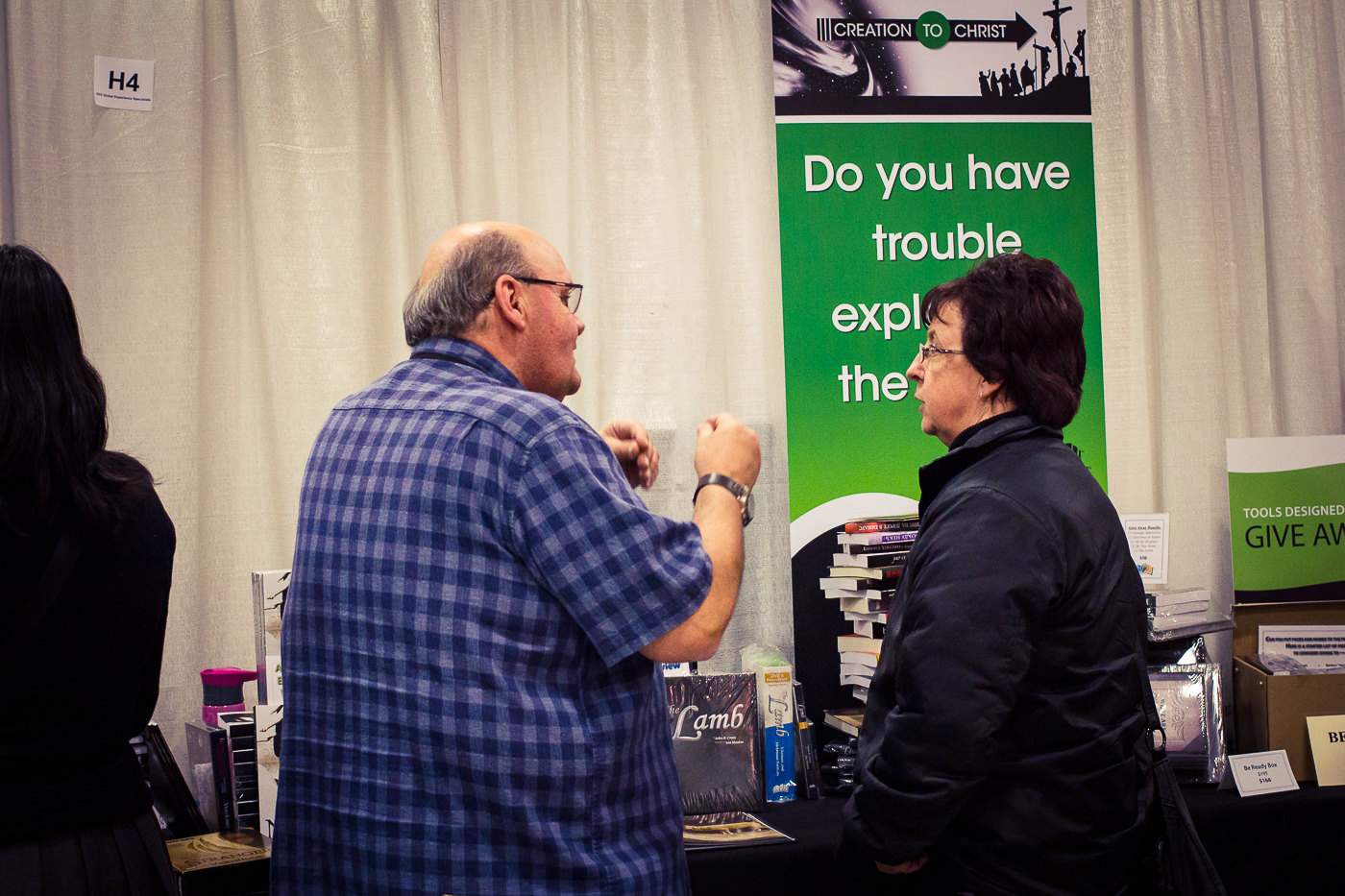 It was very good to be present at 2014 Missions Fest Edmonton. Many visitors stopped by the GoodSeed booth to check out our tools and ask us questions. We were very encouraged by the believers who had people in their lives with whom they wanted to share the gospel.
Bob* was one of the people who dropped by with a question. Some time ago, a young Chinese couple came by his office by mistake. They were actually looking for a clinic and mistook his office for it. Bob saw an opportunity to make friends and he not only helped them out, he kept in touch with them. Over the months, he met with them several times for coffee and a chat.
Continue reading “I don’t speak their language… how can I explain the good news?”
Christ pulled me from a dark hole
 Recently we received a long email all the way from the UK. It was from a man excited to share his testimony with us. He had gone through the online version of The Stranger on the Road to Emmaus VideoBook and wanted to share the impact it had on his life and the life of his family. Here is Winston’s story.
Hello. My name is Winston* and I live in the UK. This how Jesus Christ pulled me from a dark hole.
Growing up I was a happy, faith-filled boy who enjoyed attending church and Christian school. As I grew into my twenties, though, that all began to fade. I found myself slipping deeper into a hole of despair and depression—feeling beyond help! As I tried to cope, I studied different religions and philosophies and poured myself into practicing martial arts. But Zen Buddhism left me unable to meditate. Hinduism left me confused and unable to focus. The deep philosophies of man just clouded my mind. Finally I fell to my knees, but I wondered, “Would God listen to me now after all this time?”
By now, I experienced what can only be described as a meltdown. I suffered severe numbness in my face and lips––the affects of stress and depression. I was given medical leave for about four months. The doctor prescribed anti-depressants and I was sent to the hospital for tests, but they found nothing neurologically wrong with me. My depression worsened and my decisions, regrettably, took their toll on my marriage and on our son and daughter.
One day my wife, Eliza,* met a customer named Janine* at the bank where she works. In passing, Janine invited us to visit her church. Eliza had only been to church for weddings, christenings and funerals, so the idea intrigued her and we chatted about it some.
Eventually the topic came up again and, when it did, we sent an email to Janine’s church inquiring about a visit. We chuckled when three replies came back immediately—one from the secretary, one from the associate pastor, and one from Pastor Hernando*—each email a warm invitation. Our first Sunday, however, we realized that we were at the “wrong” place. We had contacted the wrong church—Janine’s was across the street! But, we were so warmly received that we continued to attend. God had a plan to connect us with the right people.
Pastor Hernando invited me to study The Stranger on the Road to Emmaus VideoBook which was hosted on the church website. So I did––all 11 hours––from start to finish. I can honestly say it changed my life! I had never seen or experienced God from that perspective. Despite my upbringing and education in Christian school, the whole meaning and truth had passed me by. I just couldn’t believe that I had spent the last 12 years walking on my own, trying to fill the void in my life. I prayed the prayer of a broken man: “Lord, save me!” It was then that Christ reached down into that hole, picked me up and pulled me out.
After completing The Stranger, the pastor and I continued to meet regularly to learn more from the Bible, first studying through Ephesians and now the life of David.
My health? Well things are much better. I only get a slight numbness now and then after stressful events. In this respect I still have to continually be in prayer for guidance and strength.
Both Eliza and I were baptized together––“dunked” as my daughter calls it. Our son and daughter have been greatly impacted by the love of our church family. They both accepted Christ last year and have expressed interest in being “dunked” sometime soon.
Last year, Eliza and I launched a new course that combines physical instruction in martial arts with an invitation to learn about the Bible’s message. We have website that has a ‘Digital Syllabus’ for members only, so I embedded The Stranger on the Road to Emmaus VideoBook into that section.
It’s awesome to think how this started off a whole new chapter in my life. I’m thankful to God for saving me!
(*Names changed as per GoodSeed policy.)
Dinner at Denny’s
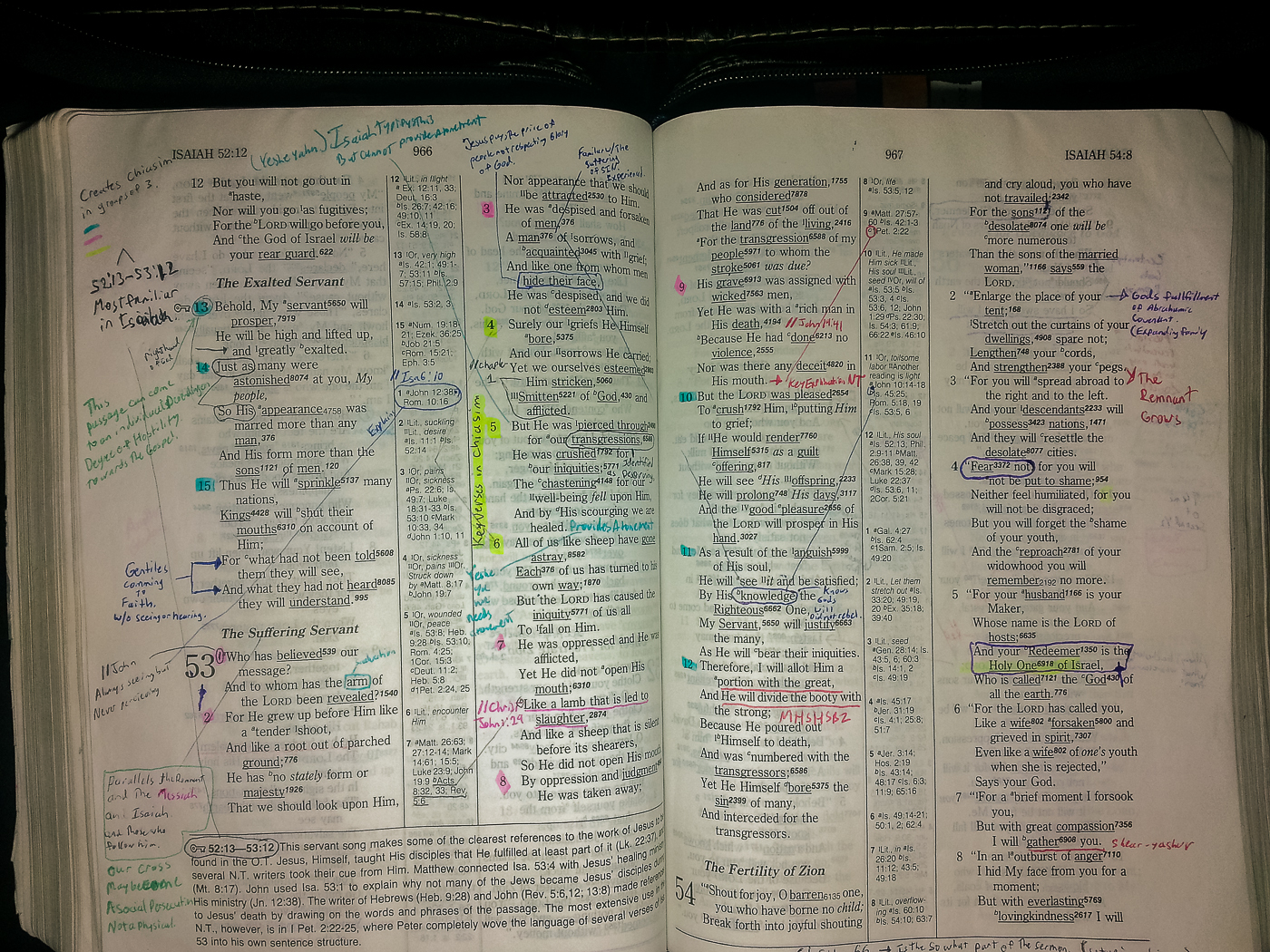 (Editor’s note: We received the following encouraging story and a prayer request from Ian.* Would you pray along with us?)
I’m currently studying at a Bible school and, one evening, I was having dinner at the local Denny’s. I was sitting at the walk-up table poring over my notes from my Isaiah class when, Stella*, the waitress noticed my heavily marked-up Bible. She made a comment that she was surprised to see all the notes and highlights.
This made me smile, as this was not the first time that I have had a waitress comment or ask about what I was reading or studying. Later that evening, when Stella was on her break, I felt compelled to show her Isaiah 40–a page that was heavily marked up. This immediately sparked a conversation! She eventually revealed that, though she had attended a Christian school, she did not really believe in the Bible. She only considered it a good book.
New Year’s resolution: make the Gospel clear
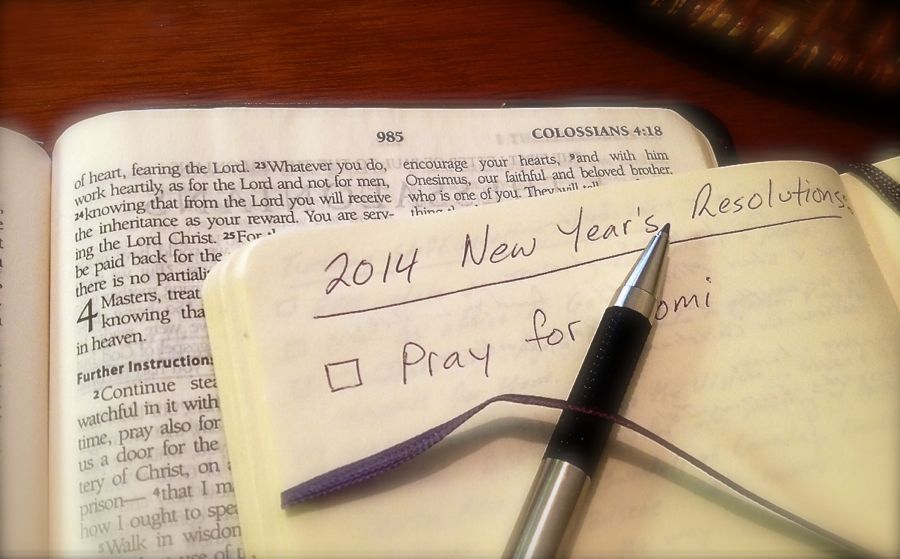
(Editor’s note: With the start of the New Year, it’s a great time to prayerfully renew our resolution to “make the best use of the time” we have with those who do not yet understand or believe the Gospel. (Colossians 4:5). Here’s a story of a couple whose resolution spanned many years as they reached out to their young friend, Naomi.)
We first met Naomi,* then a troubled 13-year-old, in 1986 at a summer camp. It took a long time to win her trust, and in the coming years we maintained nearly constant contact with her. We poured into her life all we knew, and she constantly bombarded us with questions and unique insights.
Continue reading “New Year’s resolution: make the Gospel clear”
How do I teach about atonement using colored cards?

Probably the most common visual aid we see in the Bible has to do with the atonement. Although this word is connected with one of the most profound doctrines the Bible teaches, many biblically knowledgable folk have a hard time explaining it.
The word atonement actually embraces a fairly wide spectrum of truth, but when one is teaching, you need not exhaust the subject. If you get the major point of the word across, the finer nuances of meaning will come with time. This is especially true for those who have never studied the Bible.
Here we take a look at a method for teaching one aspect of the word “atonement.” You will be amazed at how well people understand it after you use this one simple visual aid.
When one considers how much God used visual aids, it might be worthwhile for us to pause and consider how often we use them when we teach the Bible.
The following visual aids can be found in the Worldview Rethink Basic ToolBox. But here are the steps you can follow to create your own.
Step 1: Obtain the supplies needed.
- Bristle board (or card stock) bright red on one or both sides (for blood)
- Bristle board (or card stock) white on one side, black on the other side (heart) – NOTE: If in your area of the country a “black heart” would imply racism, use a white heart both sides—and smudge the one side with charcoal. Referring to it as a “heart dirty with sin” should remove the problem.
- Scrap paper to make a template
Step 2: Prepare the tool.
Take a scrap piece of paper the appropriate size; fold it and cut out the shape of half a heart. Unfold it to have a complete heart-shaped template, evenly shaped on both sides.


Using this template, trace out a heart on the black side of your bristle board. Cut it out with sharp scissors. You will end up with a heart that is black on one side and white on the other.

Cut a piece of red bristle board large enough to comfortably cover the heart in its entirety.

Step 3: Teaching with the visual aid
When teaching The Stranger — use these tools, on these pages, at these points:
[Page 78:]
“The Scripture says. . .
…without the shedding of blood there is no forgiveness. Hebrews 9:22b
God was saying that man’s sin-debt could only be paid—or forgiven—if there was death. Normally man would die for his own sin, but now, based on certain future events, God was saying that he would accept an animal’s death in man’s place—as a substitute. So an animal was to be killed and its blood shed. But there was more.
For the life of a creature is in the blood, and I have given it to you to make atonement for yourselves on the altar; it is the blood that makes atonement for one’s life. Leviticus 17:11
[Page 78]
God’s instructions in this verse are very important for two reasons.
- First: The death of the animal graphically illustrated what God’s law demanded. Sin demands death. The sacrifice pictures the law of sin and death being obeyed and justice being fulfilled.
- Second: God said that the shed blood would make atonement for sin. The word atonement means covering. The shed blood would (1) cover man’s sin, therefore, when God looked at man, he would no longer see the sin. Man would be viewed as right with God and God in his holiness could then accept man. The relationship would be restored.
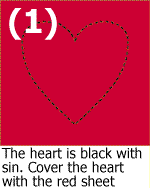
Through faith in God, as demonstrated by the death and the atoning blood on the altar, man would find forgiveness for sin and a new relationship with God.”
ATONEMENT—A COVERING FOR SIN
Sacrificing an animal on an altar did not take away the sin. Man was still sinful. The sacrificed animal only provided a covering (1) for sin, and pictured what was necessary for sin to be forgiven —death and the shedding of blood. In the same way that God had covered Adam and Eve’s nakedness with acceptable clothing made of skins, now man’s sins would be (1) covered by the blood of animals that had died in his place. Sacrificing the animal on the altar was an outward demonstration of an inner reality—the inward fact that man was trusting God. It was because man was trusting God, that God provided a way of escape from judgment and man could be restored to a right relationship with Him. Man would still die physically as a result of sin, but the eternal consequences—separation from God and punishment in the Lake of Fire—would no longer apply.
[Page 247:]
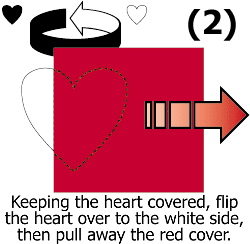
The animal sacrifices provided a yearly atonement-covering for sin. God accepted the animals because he was looking forward in history to the time when Jesus would come and die as the final sacrifice. When Jesus died, he did more than (1) cover sin for a year. He blotted it out (2) from God’s sight forever. On the cross He cried, “It is finished”— signifying “the final Lamb is found.”
Before we slip into eternity

At a Christian school conference, Jim* excitedly approached our GoodSeed booth where our staff were introducing Worldview Rethink curriculum to schools. He had a story to share. Some years ago, he had seen a copy of The Stranger on the Road to Emmaus on a co-worker’s desk and had borrowed it to read. A short time later, he was at a farmers’ market and spotted a stall where a stack of copies of The Stranger were being given away. He happily took a copy for himself. He said the book put the Bible together in way that made profound sense to him.
Jim wondered, how can I make good use of this resource? Then an idea struck him. First, he drove over to our office and picked up a case of The Stranger. Second, he pulled out his address book and thumbed through it, looking for old friends with whom he had lost touch. Next, he penned each of them a long, personal letter. He ended each one with these words of invitation:
Postcards from Brazil

We recently received a long email from Brazil. A ministry there wanted to encourage us by letting us know they had received quite a number of testimonies regarding our tools. Here are a series of translated notes from them.
My mother now believes!
A missionary wrote to say that for years she had been trying to share the gospel with her own mother. When she got a copy of Portuguese edition of The Stranger on the Road to Emmaus, she used it to teach her mother and by God’s grace, her mother understood and now believes.
How do I share the gospel with my elderly father?
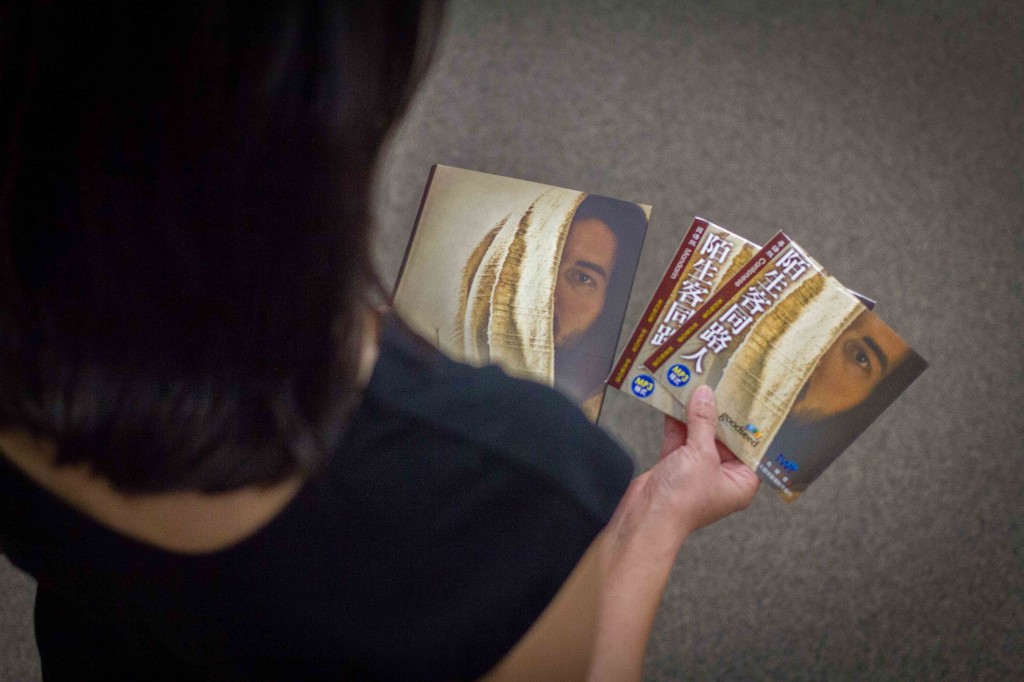
Question: I want to share the gospel with my elderly father. He loves to read his Chinese newspapers but I’m not confident he will read through The Stranger on the Road to Emmaus if I give him a copy. What do you suggest?
Answer: We would recommend spending the time to lead him through a study. If you set aside about 11 hours, you can try this: each of you hold a copy of the Chinese edition of The Stranger and you read it out loud to him. Do a section or several sections each day for two weeks. It’s best to complete the book in the shortest possible time so as not to break the flow of the narrative.
Continue reading “How do I share the gospel with my elderly father?”